Sunday, 25 April 2010

'Ashy Headed' Wagtail re-visited!

some slightly better photos of the wagtail from the 23rd April 2010.


Saturday, 24 April 2010

North Wales Coast - 23th April 2010


I spent an absolutely stunning day in North West Wales coast with my mum and dad. After visiting accommodation at Bangor University, we visited South Stack to get some specialist seabirds. Amazingly, this was the first time I had left Lancashire to do some birdwatching all year except for a brief trip to Moore NR, Cheshire.
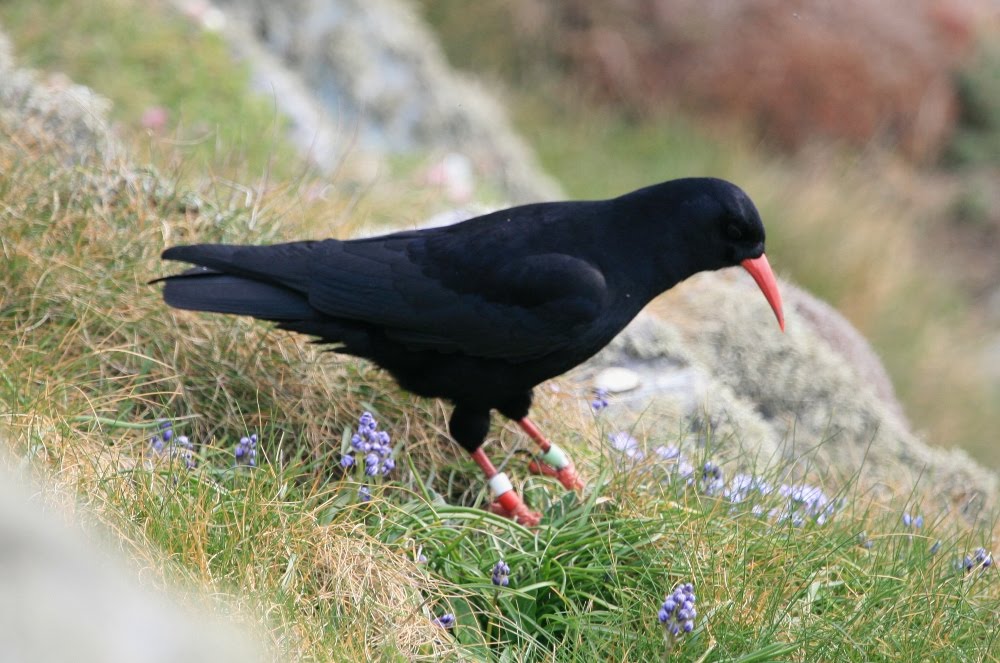
Arriving on site, I saw straight away many hundreds of Guillemot and quickly picked out a pair of Razorbill (yeartick). Also on the first cliff face, I picked up Fulmar (Year tick) and a calling Chough (yeartick) flew over, both of which were wonderful to watch as I love them both, especially the Fulmar (one of my favourite birds)
I was hoping to catch some birds flying past on the sea e.g. Divers etc, so I began scanning the mill pond of an Irish Sea. I spotted a fin briefly poking out of the sea a long long way out, so I stopped scanning. Several pairs of Bottle Nosed Dolphin popped out of the water every so often and it was obvious that there was a large pod of migrating dolphin. I estimated that there were over 50 Bottle Nosed Dolphin in 1 pod...fantastic!
Whilst viewing the dolphins swimming south, I spotted a bird with stiff wings and it was soon obvious that I was watching my first Manx Shearwater of the year.
I managed one more year tick on site, which was one of the more iconic and colourful birds of British Cliff faces - Puffin.

Heading back from South Stack, I had a quick check of Holyhead Harbour for Divers/Auks/Grebes etc. I managed to see 8 Black Guillemot and 2 Shag - Superb!

Final Stop of the day was Llanfairfechan front where I was able to do a spot of late afternoon seawatching on a mill pond. I quickly picked up many Red Breasted Merganser, Razorbill, Common Scoter and several small groups of Red Throated Diver. I payed a great deal of attention to the divers in different stages of moult from winter-summer plumage. I then was drawn in by a diver with particularly striking plumage. It was a 'stonking' Black Throated Diver (year tick) in breeding plumage! I had only ever seen a fly by bird in non-breeding plumage, so this was a real treat! On such a high from this bird, I continued scanning to see what else I could pick up. i spotted 3 Great Crested Grebe quite close by with 1 bird still in winter plumage. This struck me as odd given the time of year, so I stuck with the bird. I suddenly started picking up interesting characteristics on the bird: I saw that it was significantly smaller than the other 2 when stretched out, as well as the light and dark feathering not being especially contrasting, in fact the head marking were very smokey. It was beginning to dawn on me that I was actually watching a non breeding plumage adult Red Necked Grebe (yeartick)! After speaking to Bill Aspin, I put the news out and headed off back to Preston with another wonderful birding day under my 2010 birding belt! I will be leaving Lancashire more at this rate ;)

Thursday, 22 April 2010

probable Ashy Headed Wagtail - Brockholes Wetland LWT - 22nd April 2010

A text from Gareth Morgan just after 14.00 said ' Brockholes: Yellow Wagtail just south of Redscar Weir at 13.55 (Carl Partington)'. As I have only had fly over records of Yellow Wagtail down at the Quarry and needed if for the year list, I felt I needed to try and see it straight away after finishing college at 14.30. I arrived onsite at 15.00 after collecting my scope.
Carl Partington, Bill Berry and Bill Gregory were already watching the bird and pointed it out to me. I was amazed to see the bird in my scope with a dark grey head! Being Lancashire birders, we were all unsure about the exact race of the bird (hence why Carl sent the news out as Yellow). I spend a long time in April 2008 in North East Spain watching flocks of Yellow Wagtail races in the same field. As a result, we began discussing the features of the bird and I personally felt that it was almost exactly the same as the birds I saw in Spain of the race 'cinereocapilla', or Ashy Headed Wagtail. The bird had a brilliant white throat, two tone grey head (with ear coverts being darker). At most angles of the bird, there was no obvious supercillium but occasionally the bird did show a faint white line above and behind the eye which is a variable characteristic of cinereocapilla. The images below are taken with Bill Gregory's Canon 7D and Canon 100-400mm lens through my 20x Kowa Scope (I know...a very unorthodox method!) in bright sunlight.


I returned in the evening for the Whimbrel roost but arrived an hour earlier to get some more views of the wagtail to give a little more insight into the birds ID after a little more research on the subspecies. I viewed the bird with Chris Piner and Graham Piner, Chris Batty, Bill Gregory, Derek Gallagher and Reese, Mike Foley and other birders.
Speaking to Chris Batty, the BBRC are very reluctant to accept Ashy Headed Wagtail as the subspecies overlaps with iberiae in Southern France and produce regular hybrids. As a result, unless a bird shows no supercillium whatsoever, or a recorded call is submitted, there is a very good chance the bird will not be accepted as a pure cinereocapilla.
Chris Batty and I were really convinced by the bird so wanted to get as much information about this bird as possible. Chris filmed the bird for as long as his camcorder allowed to try and get a call on record. Sadly, the bird didn't call until near the end of Chris's film and missed the single call while he was momentarily paused the footage. We were however able to hear the call for ourselves and noted the call as being similar to standard 'flavissima' if not a little weaker. The bird took flight (when the bird called) and flew onto the quarry itself. Hopefully the call that we heard was only a half hearted and the video footage by Chris Batty will prove this birds true identity. Either way, this is a very beautiful bird and a very educational bird. If accepted, this will be the first for Lancashire and a wonderful site tick.

Also onsite during the visit: 97 Whimbrel into roost, 5+ Common Sandpiper, 4 LRP, 6 White Wagtail.

Sunday, 18 April 2010

Trough of Bowland area - 17th April 2010

1 of 4 Ring Ouzel
Male Hen Harrier
lovely male Wheatear

A simply stunning morning and early afternoon was found in the Trough of Bowland visiting 3 sites in my time with in the company of my uncle: Langden Valley, Tower Lodge and Moor Piece Wood.
We Started at the entrance to Langden Valley with several other East Lancashire regulars searching through the ever present and ever active Lesser Redpolls in the pines. In amongst these birds were at least 4 Mealy/Common Redpoll. I was able to pick out one really obvious male with a pink rump and a ringed bird. (this is only the second time I have seen Mealy, with the first being on March 18th 2006 - my first ever visit to Brockholes Quarry)
After comparing the two 'species', we walked up the valley and took the high path. It wasn't especially long before I saw one of my main year list targets - Ring Ouzel on the path in front of us! There were 2 birds (M and F) and appeared to be moving through the valley at a fairly rapid pace, which could mean they were a migrant pair.
Continuing through the valley we came across several male Wheatear, and then the 3rd target of the day - Hen Harrier. A superb male was seen hunting on the opposite side of the valley for at least 4 minutes before moving off round the hill.
We failed to see any more birds of major interest in the valley so we came back to the entrance of the valley and had a burger whilst scanning the hill behind the trees. I spotted a 'Blackbird' landing in a tree near the top of the hill. Given the area and time period, I scoped the bird and saw 'scaled' black feathers and a white bib. It was another Ring Ouzel! There was in fact 2 males to be enjoyed whilst wolfing down the delicious burger, with one being an apparent 1st winter/summer bird with the white bib not being especially full.

Upon leaving the site, we checked Tower Lodge to see if there were any early Redstart of Tree Pipit. I heard a probably Tree Pipit calling overhead but did not get a sighting or a confirmation.

Moor Piece Wood near to Bashall Eaves was the next point of call, but again the sightings were few and far between apart from several singing Willow Warbler and Chiffchaff as well as circling Buzzard.

With a perfectly clear sky due to no clouds of planes, the day was simply stunning and I couldn't have asked for more at Langden Valley. A Great day and ended my yearlist on 160

Monday, 12 April 2010

150 - Brockholes Wetland LWT - 12th April 2010

Drake Garganey - Main Pool Brockholes Wetland LWT

I finally reached 150 on the Yearlist today with a drake Garganey first seen by Sophie Leadsome on Main Pool. I was however a little in shock to get a text from Gareth Morgan about a Lancashire MEGA - Golden Eagle - which flew through Langden Valley.

Friday, 2 April 2010

Warton Bank, Brockholes Quarry, Pendle/Waddington, Leighton Moss/Woodwell - 31st March - 2nd April

31st March - Warton Bank
a 10 Meter + High tide at Warton Bank is always a good sign that it is worth the trip down Banks Lane. I arrived onsite for 11.30 for a 11.58 High tide. It was not until 12.58 that high tide actually came, which was frustrating.
As the high tide was flooding the marsh, the pipits begun to show along the foreground of the marsh. It was not long before I picked out a slightly larger and more distinctive pipit, which turned out to be a Scandinavian Rock Pipit (year tick). Pretty soon, I picked up an extremely striking white and grey Water Pipit(year tick) which was a nice addition to the list. There was a further 2 Water pipit seen including a orange flushed summer plumage bird and another Rock Pipit. A 3rd year tick was an Eider in the river channel. Year List - 138
view of Pendle Hill from Waddington Fell
1st April - Brockholes Quarry, Pendle Hill, Waddington Fell
Since about the start of February, I had planned to spend most of the day at Brockholes Quarry from first light in search of Osprey. In the spring of 2008 I went to Spain from 5th-9th April. Between these dates, no fewer than 9 Osprey were seen flying through my local patch. I therefore missed the whole of the Osprey Passage in 2008 and Osprey has turned into a bogey bird of mine.
So it was set, I arrived on site for 8am and set up camp on the Eastern end of the site on the mound next to the river. It wasn't too long before I picked out my first Birds of Prey of the scan: Peregrine was circling high over the M6 Motorway, and 8+ Common Buzzard were dotted about. At 09.37 I was scanning over to the east of the site towards Goose House Wood, when I saw a large Bird of Prey being mobbed by 2 Carrion Crow. As it banked to avoid/defend itself from an angry crow, it revealed a 'white' underside with dark underwings and white carpal patch. It was an Osprey! It was then seen to forcefully flew north until it was lost to view flying low behind Redscar Woods at c1/2 mile range at 09.40. It was such a relief after such a long period of failed efforts at the quarry.
At 10.30 I decided that I would check the rest of the site for migrants/waders brought in by the strong westerly winds. I picked up a Ringed Plover on the Island of No1, but that was about it except 2 singing Chiffchaff around the site which was a yeartick.

The day before Bill Aspin texted me about a Ring Ouzel in one of the fields at the base of Pendle Hill. I felt that Ring Ouzel would be a wonderful addition to the year list, so off I went. It took a great deal of time to get to the entrance to Pendleside farm as I went the long way round. I began to walk up the hill and got caught in a quite blizzard to add to the already white Pendle. As I got to the field above Pendleside farm, I scanned the fields and got several moments of excitement as male Blackbirds flew into the field of view in my binoculars. Unfortunately I wasn't able to locate anything except a male Stonechat.

I moved on to Waddington Fell as the sun began to come out to look for the Great Grey Shrike. I found the bird almost straight away but unfortunately it was not singing due to the wind. A Great Grey Shrike singing in the UK is an observation that is rarely heard or seen, and so far this bird was been shown to sing once heard by Allen Holmes. Year list - 140
1 of 4 Hawfinch - Woodwell
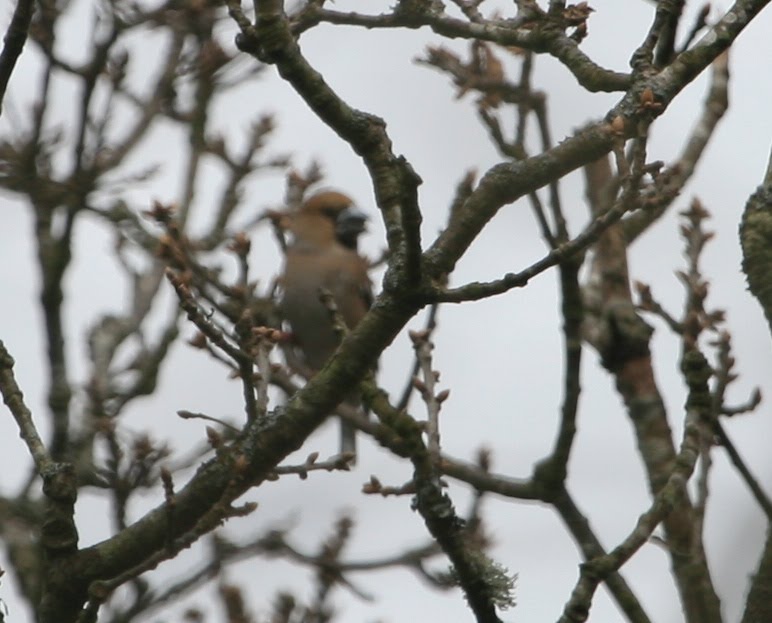
2nd April - I started off Good Friday at Woodwell in Silverdale, in search of Hawfinch. After abouut 20 minutes on-site, I spotted movement at the top of trees through the vegetation. Lifting my binoculars, I was rewarded with the lovely sight of two feeding Hawfinch. I took several photos of these awesome birds and then noticed 2 more birds flying above calling. As they flew over then watched the original feeding birds fly off in a similar direction. A superb year tick.
3 of 4 Snow geese - Leighton Moss
Marsh Tit - Leighton Moss feeding station


Eurasian Teal - Grizedale Hide
At Leighton Moss itself, i was rewarded with 4 more year ticks - Marsh Harrier, Marsh Tit and on the Eric Morecambe complex, Spotted Redshank and Snow Geese (these are 4 white morph birds that have been present in the Wyre area all Winter) A great day and final Year List total of 145

Wednesday, 10 March 2010

Waxwings - Astley Bridge, Bolton. Lancashire - 10th March 2010


up to 9 Waxwings have been present in the Astley Bridge area of Bolton for the last 3 weeks and as I have regretably not seen any this winter, I felt dutybound to do so.
I started by checking the Asda carpark by the crossroads of the A58 and A666, but no joy, so I drove into Topps Tiles and saw a few assembled photographers. Within moments I could hear the trill of Waxwings and managed to see and photograph 8 birds in total. As per usual, the birds were very tame and I was able to be less that 10 feet away at times and they just sat there patiently eating berries. Everytime I see Waxwings, I come away saying 'They are just so lovely in every way and are certainly my favourite bird!'

Thursday, 4 March 2010

Great Grey Shrike - Waddington Fell, Lancashire - 4th March 2010


I went to twitch the waddington fell Great Grey Shrike and was lucky to get wonderful light and relatively good views of the bird. With a telescope, the photos would be much better as the distance was about 100 meters and 75 meters at best.

Sunday, 24 January 2010

Smew - Alston Res and River Ribble - 24th January 2010


no, Its not just blog of dirt on a grey screen...this is actually the best I could do in the conditions at dawn Alston Res!

I arrived at Alston at 07.10 in pitch black and set up camp hoping to turn the faint black blobs on the black water surface into a Smew. As the light improved, the fog didnt, but I managed to pick up 19 Goosander and 2 smaller birds with White faces, result, the birds has roosted overnight. As I was about to send the news to Bill Aspin, i thought I could see another 2 smaller birds. I later confirmed that all four birds had roosted overnight at Alston Res. The fog made photographic conditions a nightmare. I managed to get a couple of poor videos of one of the birds which was a little closer and less flighty. At 08.18 the birds took flight and circled the res a few times, coming past me twice and headed off E/SE. My d-SLR was on self timer for some reason and there was a horrible 10 second lag time between the time I pressed the Shutter and the time the shutter opened!

I thought I would check Spare Mill Res before I checked the Ribble but only had 3 Goosander and 4 Goldeneye on here...with a raptor that I maybe shouldn't mention on a public blog.

I arrived at the Ribble at 09.30 and had a flock of 9 Pinkfeet over >SW. I was down by the river when the 4 birds with whistling wings alerted me from above and I watched them in flight for about 1 minute before I saw them come to a land towards the western end of Jackson Bank's Wood.

(Bill Aspin later found 3 of the 4 birds on the Ribble from Bezza Road, so the 4th is somewhere in the west Ribble Valley)

Saturday, 23 January 2010

Smew give me the run around - Ribble Valley, Lancashire - 20th-23rd January 2010

Alston Reservoir No1 (circular) - 22nd Jan

The week before my last A level exam of January, I really didn't want something bird-wise to take my attention away from Biology revision. News of 4 reported redhead Smew on the River Ribble in the Alston area was just the news I didn't want to get.
It was less than a year ago before I saw my first Smew up at Lower Black Moss Resr in Barley, Clitheroe, so I felt I must attempt to confirm the record as a flock of 4 would be the largest group to be recorded in the ELOC recording area.
I finished college at 10.30, so when I got the text about them, I was quick to get into action and was managed to confirm their presence at 12.44.
The birds were in loose association with Goosander but were distinctly more flighty and whilst relocating to get a better view for photography, I caught sight of the birds flying past me downstream on the Ribble. One bird seemed a little larger and has noticeably more white on the wings which lead me to age and sex this bird as a 1st winter male with 3 female.
I relocated the birds further downstream but before I had a chance to get a photo, they caught sight of me and took flight again. Their flight pattern when flushed caused them to fly almost 1/2 mile downstream each time which was rather tiresome to say the least!
I finally caught sight of them for a fourth time and was just about to press the shutter when they took flight again! I saw no reason that I was the cause but then I saw a dog walker next to the river and found the reason. I saw the birds land behind the island next to Alston Old Hall.

On the 21st Tony Cooper tried to be the 3rd birder to get a sighting of the birds but failed to locate them. As they were moving downstream, I felt that they could be heading towards the pits or surrounding river at Brockholes which would be a patch first. Robin Shenton had a look but couldn't find them.

22nd Jan, there was no news either way but my thoughts were leading to that I was the only birder to confirm a sighting and wasn't able to get a record shot of the largest flock to be recorded in East Lancashire. I was talking to Bill Aspin and were suggested that Goosander from the river roost on Alston Res, so I payed a visit before dark on the Friday but only had 1 male Goosander with no smaller sawbills in tow. I left at 3.15 so there is a chance they came in later on with the other Goosander on the river. Also present were 34 Goldeneye, female Tufted Duck and 2 male Teal

23rd Jan. I had just finished a mock exam and saw that it was approaching 4.15 so I made a decision to check the roost one more time. I quickly found a group of 5 Goosander but sadly i couldn't see any white cheeks in the red heads. I was losing hope for the birds so I decided I would check the large roost of smaller gulls (Black Headed and Common) for a Med or Ring Billed Gull (optimistic I know!) when i caught sight of another 4 Goosander, It was extremely misty and visibility was a little restricted in the fading light. I suddenly caught sight of 2 smaller birds with them and assumed they were the Teal from the day prior. The Visibility slightly improved and I could make out 2 Smew! I rang Bill with the news and he was just about to send the text that Nick Green had 2 Smew on the Ribble at the same time as me! Nick's birds are near Redscar Weir at Redscar Wood meander so are very close to being recorded from Brockholes!

Sunday, 17 January 2010

Marton Mere, Blackpool - 17th january 2010

Although there are no photos from my day out at Marton, I had an extremely productive day.
Paul Ellis and Craig Brookes had a probable American Bittern with a Eurasian Bittern on the evening of the 16th. If this is confirmed, then It would be the 2nd for the site, which is an amazing claim to fame!
I arrived on site at 07.15 and whilst walking to the Fylde Bird Club Hide, I saw a nice Woodcock flying overhead. I got into the FBC hide at 07.20 and the first bird I saw was a Bittern flying high over the site heading West. Flying into the wind, I was able to watch it for at least a minute and was able to confirm that it was a Eurasian. After this I wasn't long before I spotted a Short Eared Owl (year tick) hunting over the island.
I moved along when it started to get a bit lighter and headed towards the western end to see If i could get a Bittern out on the ice. I was quickly rewarded with a chattery song and an excellent view of a Cetti's Warbler.
I didn't have any more Bittern after my first one, so I headed to the causeway where I met up with Chris and Stuart Piner and a host of about 30 birders. I managed 2 Long Eared Owl and 293 Black Tailed Godwit that came onto the ice and roosted. I left the site at 11.30 to do some revision at home.

I ofcourse came back for dusk as an American Bittern is a bird I refuse to miss (I wasn't born for the 1991 bird...like that is an excuse!) I arrived back onsite with my parents at 3.30 and went to the causeway to again watch with the assembled birders....Stuart and Chris hadn't left yet, even though they arrived at 7.30. Between 3.30 and 5.00, we had 4 Bittern showing really well (we couldn't conjure up an American Bittern out of them... A flock of Pinkfeet flew over holding a Barnacle Goose. For now, the 21st century remains without a confirmed American Bittern on the British List...

Saturday, 16 January 2010

North Lancashire 'Yomp' - 16th January 2010

Adult Winter Mediterranean Gull - North Harbour Wall
Heysham North Harbour Wall
Purple Sandpiper on Wooden Jetty
2 ad Med Gull (1 Czech Ringed bird)
fem/imm Red Breasted Merganser flew south

Eagland Hill
Barn Owl

Yearlist - 99

Sunday, 10 January 2010

A Snowy Preston - 5th-9th January 2010

1 of 3 Fieldfare
1 of 2 Mistle Thrush

Thrush footprints leading to apple (which was dragged off to the left by Fieldfare)

As the snow fell on my garden lawn, so did the birds. My usual Blackbirds were joined by 3 Fieldfare, 2 Redwing, 2 Mistle Thrush (1 being a presumed 1stw winter female) and a Song Thrush, all feeding on Apples and Raisins I put out for them.

My College was closed on Tuesday 4th and Wednesday 5th which allowed me to spend time watching the different behaviour of birds in the snow. For example, Magpie was seen 'flycatching' snow flakes from my bird table and it kept flying to and from thin air.

Ever since the Mistle Thrush's have appeared in the garden, nothing else has! One particular Male was an absolute brute of a bird that mobbed everything within a 30 meter radius of his apples. The worst thing was that he generally just sat in a tree not even eating food himself which seemed pointless.

Apart from the unusual visitors to my garden(that made revision difficult due to their entertaining antics), I managed to make a quick stop at the beautifully wintery Cottam Brickworks and managed to see the (now aged at 1st winter) Willow Tit at the feeder for my Yearlist.

Sunday, 3 January 2010

Marton Mere - 3rd January 2010

Drake Ring Necked Duck with Pochard, Tufted Duck, Mallard, Coot and Teal.
1 of 3 Long Eared Owl
Fieldfare

An early morning trip to Marton Mere with Chris Piner was in order to seek out the ever present Cetti's Warbler, as neither of us had seen then on our Fylde list (Chris hadn't seen Cetti's at all)

We started in the Fylde Bird Club as we felt this was probably our best bet. Within a couple of minutes Chris alerted me that he though he had just seen the Ring Necked Duck. I got onto the bird quickly and confirmed the ID, so sent out the news to local bird networks. It was far more active today compared to when I saw it at Thornton. With not having a compact camera with me at the time, I wasn't able to digiscope any shots so the poor photo above was with a 400mm d-SLR.

After a short time, we decided to check for the Owls and come back for the warblers later on. We checked the Bridleway for the owls looking deep within the vegetation. This caused embarrassment when a runner pointed one out just next to the path. We managed to see all 3 Long Eared Owls with relative ease.

Heading back to the Fylde Bird Club hide, we bumped into Bill Aspin, John Wright, Margaret and Mark Breaks. They had successfully twitched the RND. Back in the FBC hide, we managed to see a Water Rail casually walk across on the ice which was a year tick for both me and Chris.
Bill Aspin then rang up to tell us that they had heard a Cetti's on the other side, which we were able to catch up with with relative ease. It was quite elusive but both me and Chris were able to hear it call and briefly see it. A nice Fylde and Lancashire tick.

(we headed to Warton Marsh for high tide, but as the tide failed to flood the marsh, we left quite soon after seeing very little!)

Tuesday, 29 December 2009

Ring Necked Duck - ICI Thornton, Lancashire - 29th December 2009

Drake Ring Necked Duck
The Fylde has created a very good end to 2009 with 2 lifers in 2 days! A text from the Fylde Bird Club news team just after lunch caused me to put a hold on revision and put my Megane into race mode. Soon enough I was parked in a carpark full of the cars of the Fylde regulars. A 1/2 mile walk to the ICI tank was rewarded instantly as there were about 10 scopes all trained on a group of aythyas. The bird was immediately recognisable with its brilliant white patch on the flanks and grey towards the rear. I arrived after the light was going and the drake had decided that it has shown off to the crowds for long enough and the views above of it roosting were the same thoughout my visit. Scope views were excellent however and my photos do not do justice to how striking even when roosting, this bird was. Great bird and a fine way to end 2009 and my 2009 fylde year list on 161.

Monday, 28 December 2009

Goose Watching - Marshside and N. Fylde - 28th December 2009

I started off at first light at Marshside RSPB with the intent of doing several hours Goose Watching...To my horror, I arrived to a Pea Souper with only 20ft Viability. I persevered until about 10.30 and managed to stop the Great White Egret (the same colour ringed bird that visited Brockholes in the Autumn). As it was obvious that the fog wasn't clearing, I made a quick stop at Southport Marine Lakes and managed to connect with one of the two Shag present.
adult Eurasian White-fronted Goose.


Pinkfeet
It was clear that I wasn't going to be able to search for my target White fronted Geese at Marshside, so I thought I would try the flock of Pinkfeet near to Freeport in Fleetwood where Jonny Scragg found 2 juv Whitefront on the 27th. It took about 40 mins searching the flock of about 1100 Pinkfeet before i spotted anything different. A superb adult European White Fronted Goose feeding actively in the centre of the flock. This is a lifer for me and one of my unluckiest birds throughout my birding career! Another couple of searches through the flock and I picked out Jonny's 2 European Whitefronts. Hunger was taking over, so I decided I would go round to the other side of the flock for a few scans of the back of the flock. On my very scan of the flock, I picked up a Tundra Bean Goose feeding away from the flock with a Pink foot. This was only my 3rd Bean Goose after 2 Tundra Bean Geese on Eagland Hill in 2005.

Wednesday, 23 December 2009

Velvet Scoter - Barrow Lodge, East Lancashire - 23rd December 2009

A female/immature Velvet Scoter turned up on what appears to be a coastal magnet! Barrow Lodge is currently no larger than a garden pond as 3/4 of the lake is frozen over. Even so, there is a large population of mallard that have certainly been welcoming to the scoter. This is my first inland Velvet Scoter and also the first record for East Lancashire. The Bird fed actively only 10 feet away throughout my visit. A superb bird and a fabulous Christmas Present to all East Lancashire Birders who get a chance to see it before it decides to have more of a seafood dinner.
Female/immature Velvet Scoter.